
Interlock Sealing
in Gatineau and Ottawa
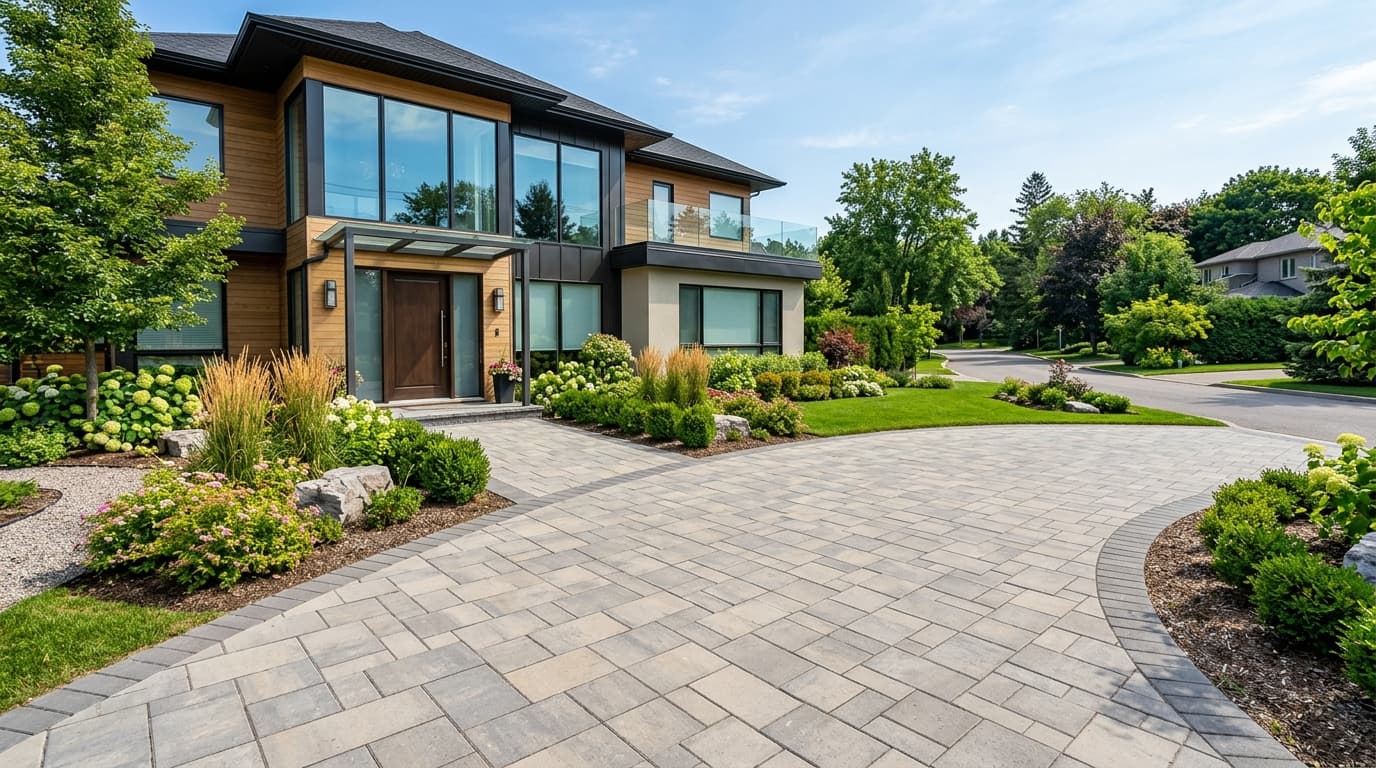
Sealer protects your pavers against stains, sun and de-icing salt, and brings back their colour. Optional on every project.
Free visit, written price, 12-month warranty.
Reply within minutes
Get your free quote
3 questions, under a minute. No commitment.
- We come to you and give you a free written quote.
- Always our own crew on site, never a subcontractor.
- We reach you by phone or text.
How we apply sealer
Four steps, on clean, dry pavers.
Washing and joints
We pressure wash your pavers (3600 PSI, 2.5 GPM, Honda engine) and redo the joints with new polymeric sand. The sealer always comes after.
Fully dry
We wait about 30 days after the sand and until the pavers are fully dry: applied on damp pavers, sealer can turn white. We pick a day between 10 and 30 °C with no rain forecast for 24 hours. Just before, we clean the pavers one last time so no dirt is left on top.
Even application
We apply Techniseal's wet-look sealer evenly over the whole surface with a commercial-grade pump sprayer, pumped up tight, so the colour is even everywhere. The coat has to be just thick enough: too thin and you cannot see it, too thick and it leaves a white film on top.
Drying and check
We check the finish and clean everything up before we leave. According to Techniseal, you can walk on it after 24 hours and park on it after 48 to 72 hours.
Our finish: wet look
One finish, on every project: Techniseal's wet-look sealer. It's the best we've found.
Colours brought back
Your pavers get darker and richer, with a slight shine, like wet pavers.
Against salt and stains
It slows wear from de-icing salt and keeps stains from soaking in as fast.
Easier upkeep
Its clear film slows dirt from getting in, which makes the pavers easier to maintain, according to Techniseal.
Signs it's time to seal or reseal
In Gatineau and Ottawa, de-icing salt and our winters wear sealer down. Here are the signs we see most often at our customers' homes:
- The existing sealant is peeling, yellowing or flaking in visible patches.
- Water no longer beads on the surface and soaks directly into the pavers.
- The colours look washed out despite a recent cleaning.
- Oil or calcium stains soak into the stone instead of staying on the surface.
- The pavers have never been sealed since installation, even if they still look okay.
As long as water beads up on your pavers, the sealer is still protecting them. When it stops beading, it's time to redo it: Techniseal says at least 2 years. It's part of the same maintenance that keeps your interlock solid from one season to the next.
Why trust us with your sealer
What we do on every job, no exceptions.
Pavers prepared first
We wash and redo the joints before sealing. Applied on dirty pavers, sealer traps the dirt.
A written price, no obligation
We come out for free and give you a written price. You decide afterwards, no pressure.
Always our own team
Émile and Beckett, two local entrepreneurs. No subcontractors: it's our own team on your job site, start to finish. We reply within minutes.
12-month guarantee
A 12-month guarantee on our work. All the details are written in your contract, which you can read before you sign.
Where we seal interlock
We seal interlock anywhere in Gatineau (Hull, Aylmer, Masson-Angers, Buckingham) or Ottawa. We come out for free to look at your driveway, patio or walkways.
Our customer reviews
In their own words, as written on Google.
Why not wait
Without protection, oil stains, sun and de-icing salt attack your pavers a little more every year. Sealer is added to your joint project, in a separate visit about 30 days later (see how to redo the joints of interlock pavers). Our projects generally run between $800 and $4,500, depending on the surface, the condition of the pavers and the sealer. Old sealer gone white or damaged? See what we do about it.
Cleaning, joints or releveling?
Sealer does not fix everything: it protects pavers that are already clean. Here is how to tell if that is your case, or if something else comes first.
- Moss, black stains, weeds or dull pavers: that is an interlock cleaning. The pressure wash removes everything, including the old sand in the joints.
- Empty joints, sand washing away, ants or weeds in the joints: the joints need new sand, covered in our article on redoing joints. With us it is the same visit: after the wash, we put in fresh polymeric sand.
- A few low spots or pavers that move: these are small spots for releveling, done during a restoration once the cause is found. Why interlock pavers sink.
- The whole driveway is uneven, with highs and lows everywhere: that is no longer a cleaning or a releveling. When the base is uneven almost everywhere, the pavers have to be laid again, and that is not a job we take. Restore or replace.
- The pavers are clean and you want to protect them: that is sealing, applied about 30 days after the sand. Never over dirty pavers, because the sealer would lock the dirt in. Applied too early or on pavers that are still damp, it turns white: white or damaged sealer, what to do.
Not sure what your pavers need? A free visit is enough to find out, and we tell you straight.
What we check before sealing
A good sealing job depends mostly on what happens before it. Here is our list, and the one to follow if someone offers to seal for you:
- The pavers are clean: no moss, no dirt. We never seal over dirt, the sealer would lock it in.
- Everything is dry: pavers and joints, down to the last drop. Too early, and the sealer turns white.
- The pavers are swept: leaves, grass and loose sand that landed since the work are gone.
- No rain on the way: if it gets wet too soon, the sealer can set badly.
- The layer is even: where it is too thick, it dries and stays white. White or damaged sealer, what to do.
Frequently asked questions about interlock sealing
Another question? Call or text us at 819 328-2129, or read our answers about sealer and polymeric sand.

Clean joints for years to come
We come see your pavers and give you a written price, free.
Get my free quoteFree visit, written price, 12-month warranty.