In short
- Sealer that turns white mostly comes from not waiting long enough before sealing: joints and pavers not dry, or getting wet soon after.
- Another cause is uneven application. Where the layer is thick, it stays white instead of drying translucent.
- Once, an old badly applied sealer came off with the pressure washer alone. Other times, a chemical stripper is needed.
- Strippers melt the sealer, but they're quite toxic. We don't recommend them.
- We always clean before sealing. We never seal pavers that are dirty or have moss on them.
Why sealer turns white or hazy on pavers
The main cause is not waiting long enough before sealing. The joints and the pavers weren't dry. Rain, or getting the pavers wet soon after, causes problems too.
The second cause is uneven application. The sealer's own color is a white-beige, sometimes slightly yellowish, mostly white. Where the layer is thick, it dries and stays white instead of turning translucent.
The rest is often a mix of all that: sealer applied wrong, a cheap-quality sealer, wrong conditions. With us, everything dries completely and we seal on a separate visit, about 30 days after the sand.
Taking off old sealer
Here's what we've seen with old, damaged sealer. Once, an old sealer that was put on badly came off with the pressure washer alone. That was one job, not a rule.
Other times a chemical stripper is needed, a product that melts the sealer. They're quite toxic and we don't recommend them.
Clean first, then seal
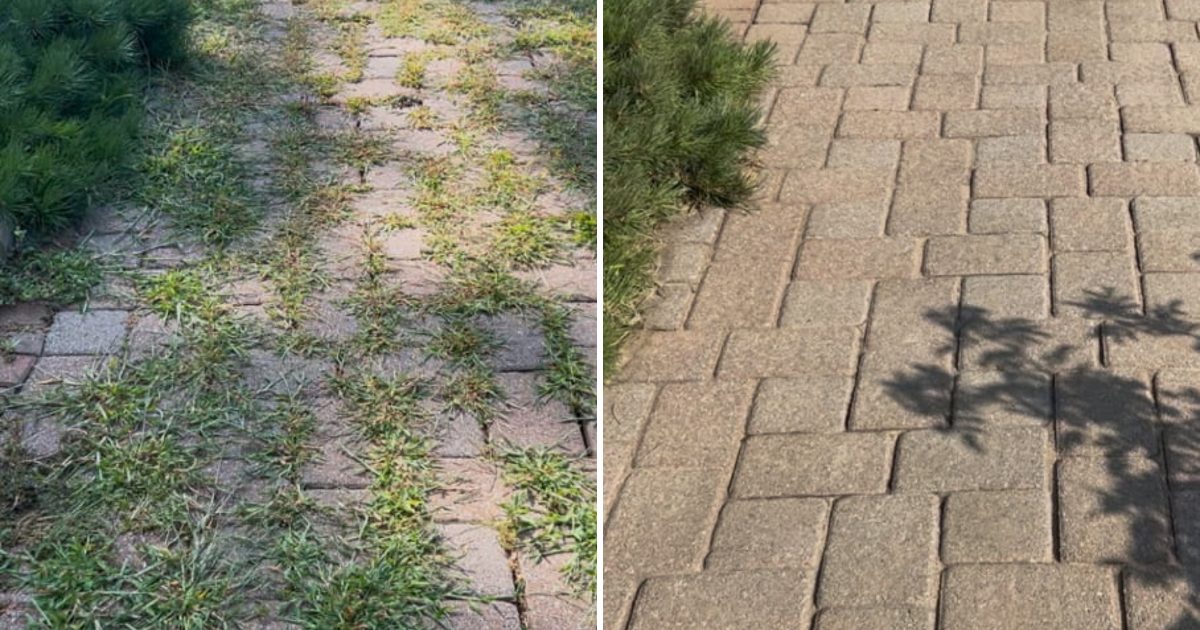
We never seal pavers that look bad or still have moss on them. Cleaning comes first, sealing second. If the pavers need a wash, that's day one of the project.
Sealing happens on a separate visit, about 30 days after the sand. Before that, we sweep or blow off the dirt, leaves, grass and loose sand that settled since the job. The details are on the interlock sealing page.
Old sealer to remove?
We come look at your pavers and give you a price on the spot. Free, no commitment.
Free quote Call 819 328-2129Should you seal again?
It's optional. About 90 percent of our clients choose it, for the better look and the protection. How long it lasts depends on the pavers: we don't give a number.
The wet look
The wet look makes the color look deeper. The pavers get a little shiny, they reflect the light and look brand new.
Sealing, in the order of the job
We clean
Every paver is washed, then left to dry completely.
We redo the joints
The polymeric sand goes in on a later day, on dry joints.
We sweep, then seal
About 30 days later, on a separate visit, once the dirt and loose sand are gone.
When to seal
We start projects from May to the end of September. We don't start new projects in October, but we finish the ones already under way.
Questions we get a lot
Pavers that need cleaning before they're sealed go through our interlock cleaning in Gatineau page. If the joints need redoing too, see interlock repair, or the article on how to redo the joints of interlock pavers. For a written price, we can come and look at your pavers.
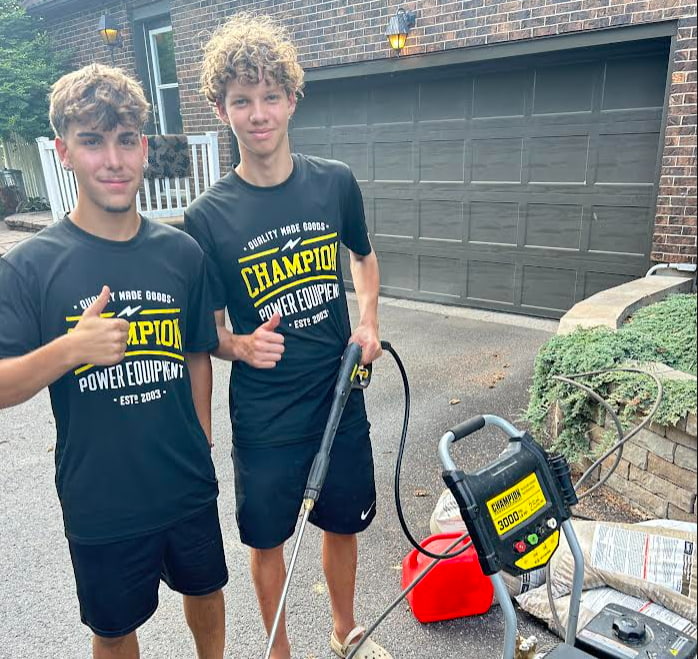
We're Émile and Beckett, the two guys behind Duo Vert. We restore interlock in Gatineau and Ottawa, with our own team and no subcontractors. What's written here is what we see on real jobs.
