
In short
- Redoing the joints means washing the old joints empty, then filling them with new polymeric sand.
- Day one is cleaning only. The sand goes in on a later day, once the joints are completely dry.
- On sand day: three layers, two passes with a plate compactor, then two rounds of wetting.
- In all, 2 to 4 days. Sealing is optional and happens on a separate visit about 30 days later.
What redoing the joints means
Redoing the joints of interlock pavers means taking out the old sand, moss and weeds from between the stones, then filling every joint with new polymeric sand. The two go together. Clean pavers with empty joints don't stay clean for long: dirt and leaves fill them back up.
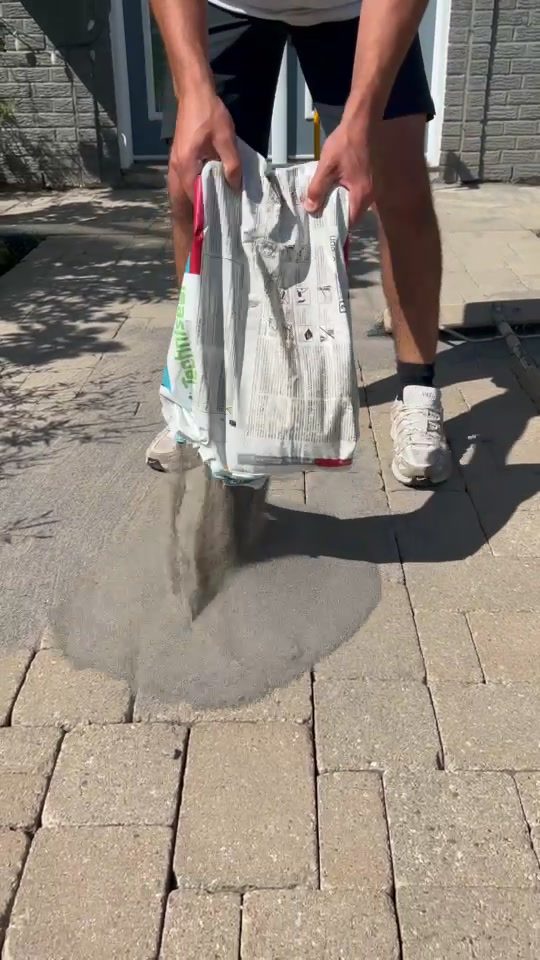
Polymeric sand is the paver joint sand we use: it holds a binder that hardens when you activate it with water. On every job we use Techniseal HP NextGel, and the maker publishes a data sheet for it.
The steps, in order
Day one: we wash, nothing else
Commercial-grade equipment and a turbo nozzle, not the small nozzle that comes on every home washer. Old sand, moss and weeds come out precisely, to a depth of at least 1.5 in (38 mm), sometimes a bit deeper.
We wait until it's all dry
The joints have to dry completely before any sand goes in. A big job takes two days to wash, and the sand waits for the third.
Sand day: three layers
Polymeric sand, compact, a second layer, compact again, then a final layer.
Leaf blower and wetting
We blow off the extra sand, then wet it in two passes, zone by zone, without missing a joint or going over the same spot twice.
We let it set
We pick dry days: the sand needs 24 to 48 hours to dry, and 48 hours above 0 °C after it goes in.
Why three layers and two rounds of compacting
Compacting pushes the sand to the bottom of the joint. With three layers and two passes of the plate compactor, the joint is full all the way down, it hardens properly and the pavers stay stable. Skip that and the cracking and sinking eventually start.
Why two rounds of water, and no more
After the last layer we blow the extra sand off with a leaf blower. The second pass is shorter: it makes sure everything absorbs. Every joint has to be wet right through but never overwatered, because too much water keeps the sand from hardening properly and leaves a poor result.
How long it takes
Sand day is always a single day, whatever the size of the surface. With the wash and the dry wait, the whole project takes 2 to 4 days, never more than 4. On weather, we work when it's above about 5 to 10 degrees, with no snow and ideally sun. June, July and August are the best months. We start projects from May to the end of September, and they can finish in October.
The shortcuts that ruin joints
Some companies put the sand in the same day as the wash, on joints that are still wet. It saves a second trip, and that's exactly why they do it. The sand doesn't set the way it should.
Others skip compacting, use a small hand tamper, or compact once to save time. We go over it twice, with a plate compactor. None of these mistakes show on the day. They show up later, when the joints empty out or the pavers shift.
Weeds in your paver joints?
We come look at your pavers and give you a price on the spot. Free, no commitment.
Free quote Call 819 328-2129Doing it yourself or calling a pro
The steps are easy to understand. The hard part is doing all of them properly: a washer with a turbo nozzle, a plate compactor, a leaf blower, dry joints and a second day without rain. On a small surface, with the right equipment and some patience, it's doable.
If you don't have the equipment, the surface is big or the pavers are already in rough shape, a pro mostly saves you from the shortcut that ruins the rest. Either way, never skip the wait between the wash and the sand.
What about sealing?
It's optional, and most of our clients choose it. We do it on a separate visit, about 30 days after the sand. Before that, we sweep or blow off the dirt, leaves and loose sand that settled since the job. We never seal pavers that are dirty or still have moss on them: they get cleaned first. More on the interlock sealing page.
Questions we get a lot
We redo joints in Gatineau, Aylmer, Hull and Ottawa. For the full steps, see our interlock repair in Gatineau page and the one on interlock cleaning in Gatineau. If weeds are coming up through your joints, read why they keep coming back first. For a written price, we can come and look at your pavers.
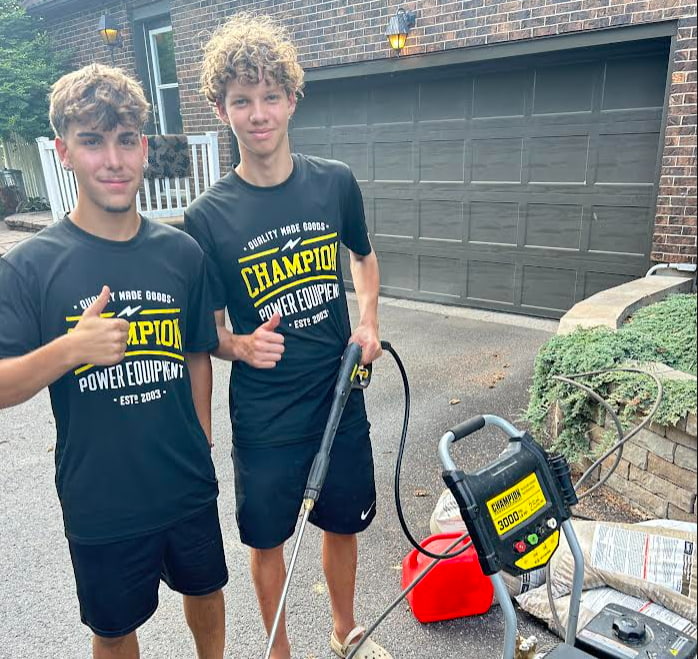
We're Émile and Beckett, the two guys behind Duo Vert. We restore interlock in Gatineau and Ottawa, with our own team and no subcontractors. What's written here is what we see on real jobs.
