
In short
- Vinegar and boiling water kill the top of the plant, sometimes the start of the root. It's back within weeks.
- What fixes it is a joint that's emptied out completely and refilled with polymeric sand that's installed right. When it's truly infested, we lift the pavers to get every root out.
- A job done right stays weed-free for 3 to 5 years. If the weeds are back in under a year, the job was done badly.
Why weeds grow between interlock
Weeds move in where the sand has gone. Over the years, rain and snowmelt wash the joints out. The gap fills with dust, leaves and dirt. A seed lands in there with water and soil, and that's all it needs.
The longer you wait, the deeper the root goes between the pavers. What's underneath matters too: some ground lets weeds through more easily than others.
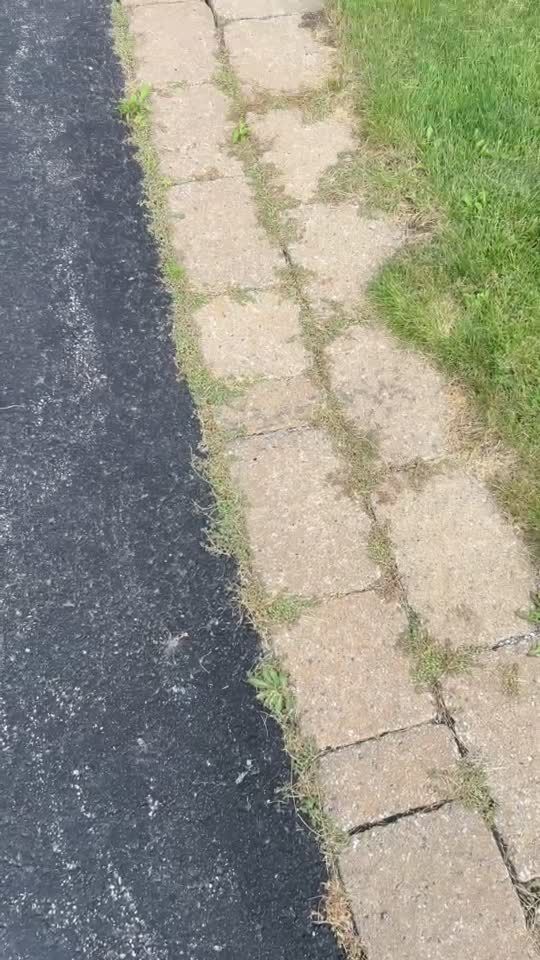
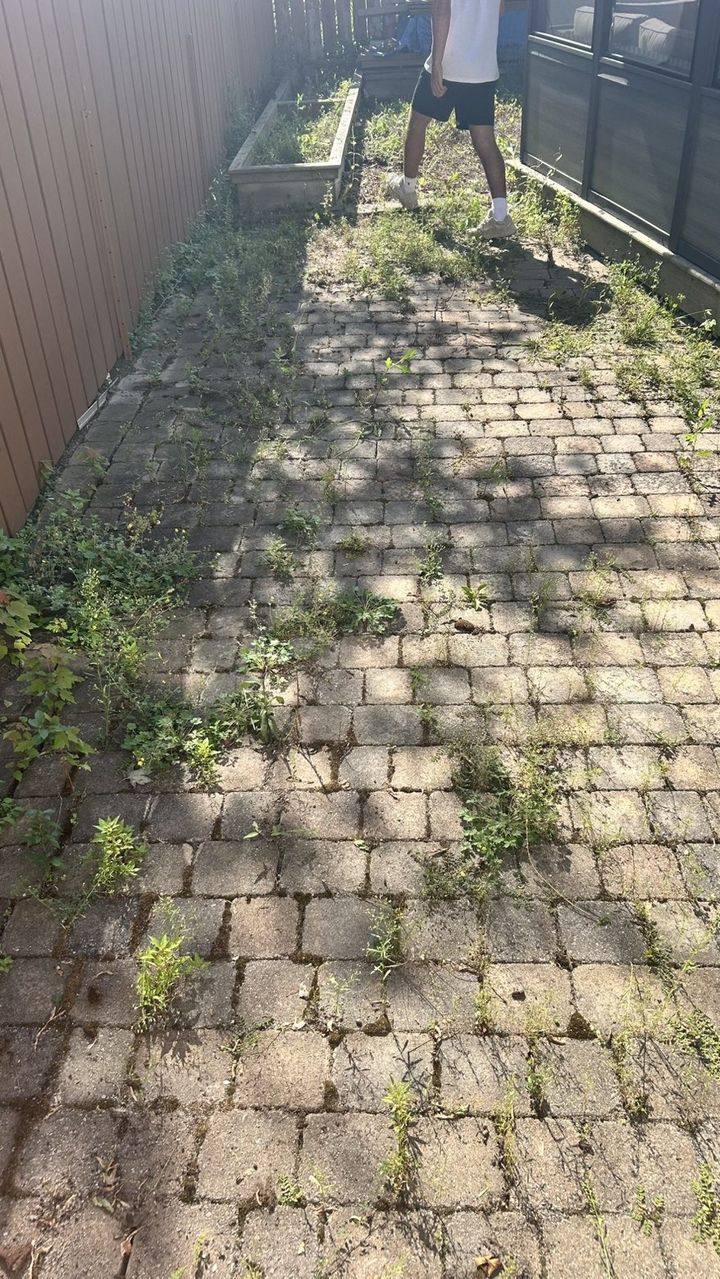
Does vinegar kill weeds between pavers?
We get asked this a lot. The honest answer: vinegar and boiling water can help, but they don't fix the problem.
“Vinegar and boiling water might kill the surface of the weed right now, and maybe the early root, but it will definitely come back in a matter of weeks. I've never seen vinegar or boiling water do as good a job as professional-grade equipment.”
Émile, Duo Vert
As long as the joint is empty, a new seed will end up taking the old one's place. Redoing the pavers properly is ten times better.
Does polymeric sand prevent weeds?
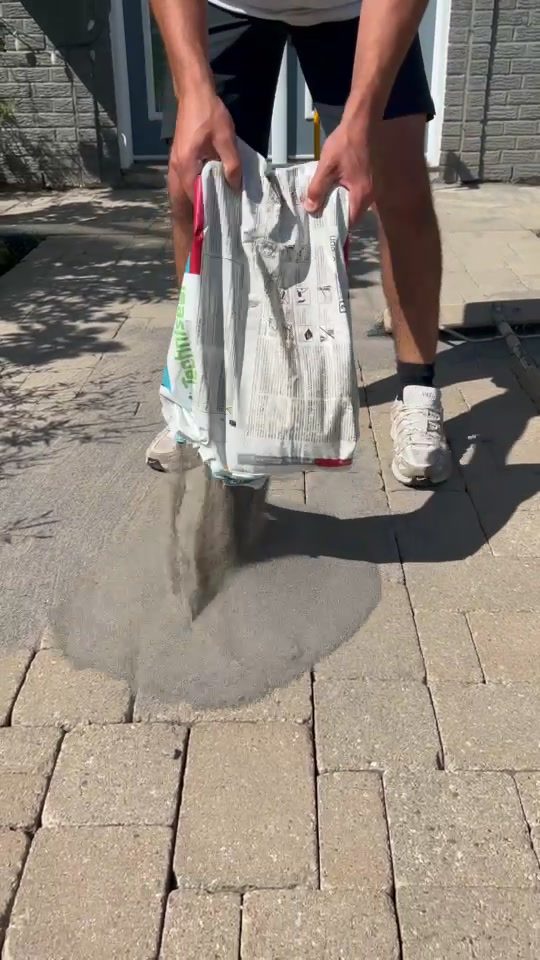
Yes, and that's the real fix, because the real problem is the joint sand. Regular sand stays loose. Water washes it out and the joint empties. Polymeric sand has a binder that hardens when you activate it with water. Once it sets, the joint is firm and weeds have nowhere to grow.
Over the seasons we've used four polymeric sands: Sika's, and Techniseal's RG+, EZ and HP NextGel. The one that won is HP NextGel. Sika was second, and close.
Why Techniseal HP NextGel polymeric sand won
More consistent
The same result from one job to the next.
Less haze
It leaves less haze on top of the pavers.
Holds up to winter and rain
It lasts longer and doesn't crumble.
Cleaner finish
A sharper look across the whole surface.
It's also the most expensive of the four, and for us the quality explains it. The others aren't bad, they're good products. They're made more for DIY and lower-budget jobs. For a job that has to last years, we use HP NextGel.
Weeds in your paver joints?
We come look at your pavers and give you a price on the spot. Free, no commitment.
Free quote Call 819 328-2129How we get rid of weeds between interlock for good
At Duo Vert, our main tool against weeds is our Honda pressure washer. It's professional-grade equipment that clears the joints out completely without damaging your pavers.
With experience, we can tell right away whether pavers are just old or truly infested.
When the pavers are just old
We pull the old sand
And whatever grew in it.
High-pressure wash
With our Honda pressure washer, to empty the joints completely without damaging the pavers.
New polymeric sand
Techniseal HP NextGel in every joint.
Water activation
Just the right amount so it hardens. Sealant is available as an option.
When it's truly infested
We remove every paver and make sure all the roots are gone. That's the only way to beat it. We clean everything out, put the pavers back, then install the new sand.
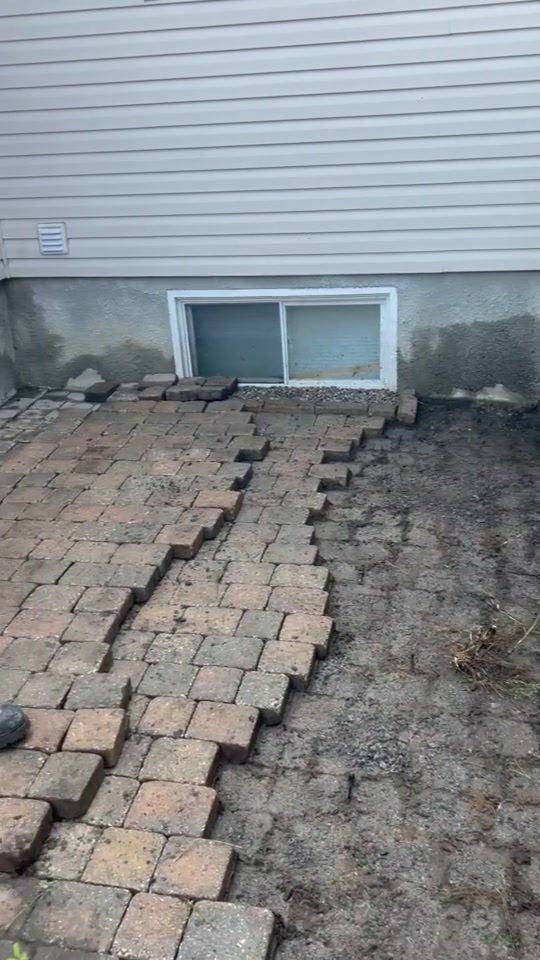
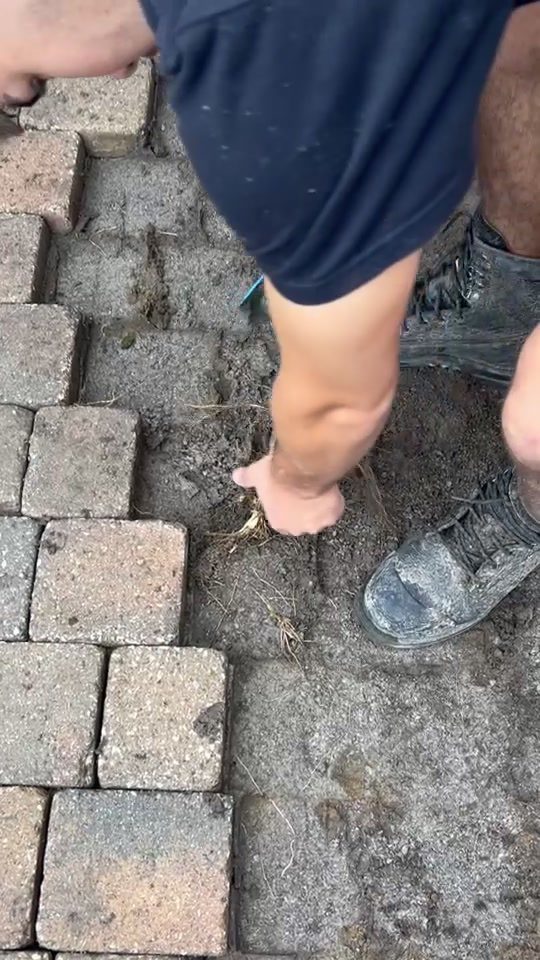
We always do the whole surface, never a section. Otherwise the joints aren't the same age and the colour isn't even. For the details, see our pages on interlock repair with polymeric sand and interlock sealing.
How long before they come back
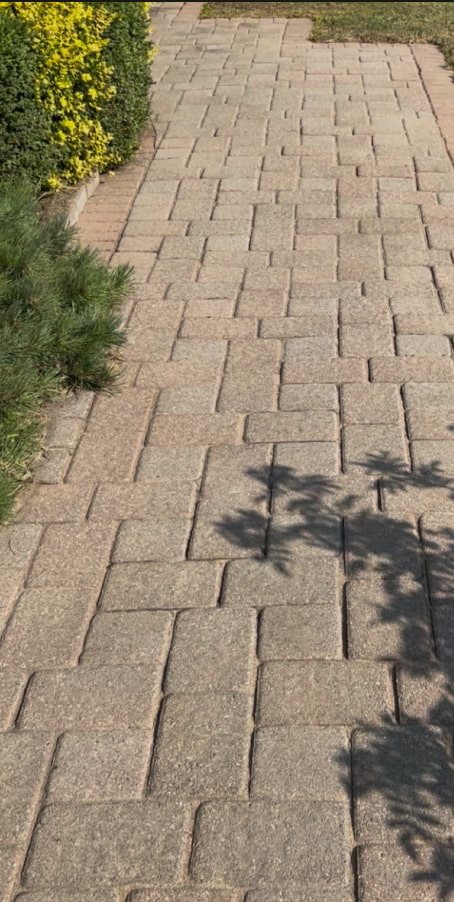
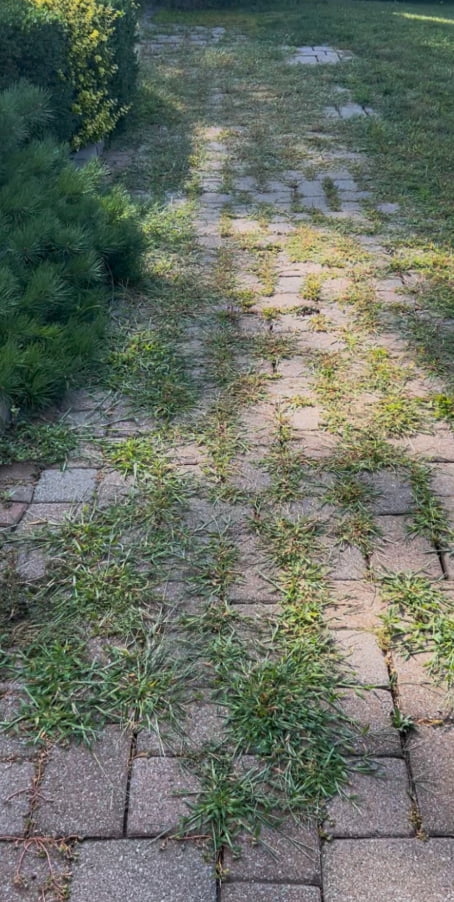
It mostly comes down to the installation.
Job done badly
A few months
They can come back within weeks or months, usually fewer than before. If the pavers are full of weeds again in under a year, that's the biggest sign the job wasn't done right.
Job done right
3 to 5 years
Weed-free, depending on the pavers and the ground underneath. After that you might see a small one here and there, but it still looks good. A full restoration usually comes around 6 to 8 years.
What makes a joint fail
A job can fail at any step. You can do everything right, from the washing to the sanding, and lose it all at activation:
- too much water, or too little, can ruin the joint;
- rain in the next two days can undo all the work.
It really comes down to precision and timing.
Questions we get a lot
We serve Ottawa, Gatineau, Aylmer and Hull, and we restore interlock driveways, walkways and patios. If your joints look like the photos above, we can come take a look and give you a price on the spot.
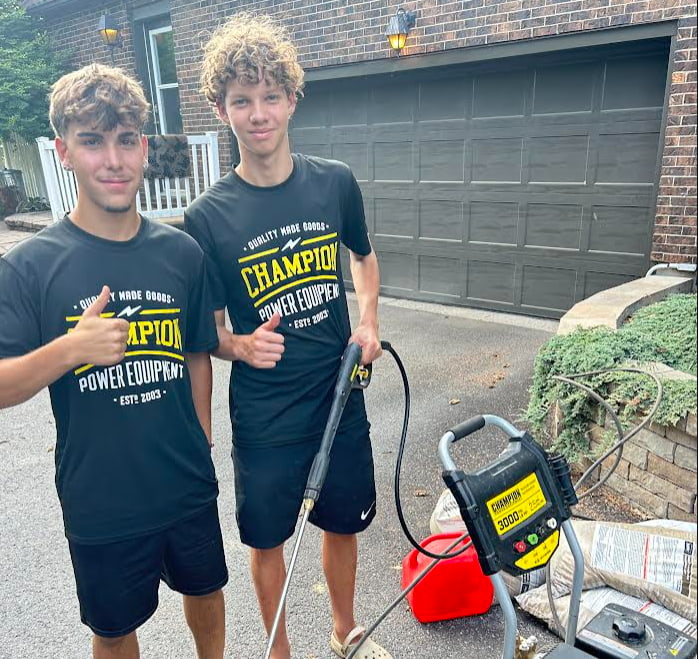
We're Émile and Beckett, the two guys behind Duo Vert. We restore interlock in Gatineau and Ottawa, and we do every job ourselves, no subcontractors. What's written here is what we see on real jobs.
