

Interlock Repair and Cleaning
in Gatineau
We pressure wash your pavers, redo the joints with new polymeric sand and apply sealer if you want it.
Free visit, written price, 12-month warranty.
Reply within minutes
Get your free quote
3 questions, under a minute. No commitment.
- We come to you and give you a free written quote.
- Always our own crew on site, never a subcontractor.
- We reach you by phone or text.
How we repair your interlock
Four steps, always done by our own team.
Free quote
We come see your pavers and give you a written price. On the day of the work, we protect the lawn and flower beds before we start.
Pressure washing
We clear out the old joints and remove moss, stains and dirt with our pressure washer (3600 PSI, 2.5 GPM, Honda engine), set so it won't damage your pavers.
New polymeric sand
We re-sand every joint with Techniseal HP NextGel. We've tried four sands (Sika, RG+, EZ and HP NextGel): this one lasts the longest and leaves the least haze on the pavers. We use it on every project.
Activation and cleanup
We activate the sand with water (details below), then pick dry days, because the sand needs 24 to 48 hours to dry. Before we leave, we clean everything up: there's nothing for you to pick up.
One day to clean, one day for the polymeric sand
Day one is cleaning only, with commercial-grade equipment and a turbo nozzle, not the small nozzle every pressure washer ships with: old sand, moss and weeds come out precisely. The joints then have to dry completely. We wash in two full passes: one pass leaves spots behind, and it is the joints that need a deep clean, not just the stones. Then we wait 24 hours after the last pass and check the weather, at least two sunny days with no rain, before the sand goes in. A big job takes two days to wash, and the sand waits for the third.
On sand day we work in three layers: polymeric sand, compact, a second layer, compact again, then a final layer. The sand packs deep into the joints, hardens properly, and the pavers stay stable, with no cracking and no sinking. Some companies compact once, or with a small hand tamper. We go over it twice with a commercial-grade plate compactor whose polyurethane pad absorbs the shock: metal never touches the pavers, and the sand still goes deep into the joints. Without that pad, the plate breaks pavers. We blow off the extra sand with a leaf blower, then wet it in two passes, in zones of about 50 sq ft wet at the same time, so every joint gets the same amount of water, making sure every joint is fully wet without overwatering: too much water keeps the sand from hardening properly and leaves a poor result.
The steps and the mistakes to avoid are covered in our article on how to redo the joints of interlock pavers. If you are weighing a home fix for weeds, see what vinegar, bleach and dish soap can really do, and if a low spot is what worries you, read why interlock pavers sink.
Signs it's time to redo your interlock joints
Not sure if your driveway, patio or steps need it? Our freeze-thaw winters wear the joints out faster. Here are the signs we see most often at our Gatineau customers' homes:
- The joint sand has disappeared or become loose. The pavers shift slightly when you walk on them.
- Weeds or moss keep growing back between the pavers, even after you pull them out. Here is why weeds keep coming back between interlock pavers.
- The colour is faded or stained by de-icing salt, oil or built-up dirt. Here is how we wash interlock all the way into the joints.
- Individual pavers are sunken or raised, creating an uneven surface. Here is how we fix sunken interlock.
- Water no longer drains properly and pools after rain.
- The existing sealant is peeling, yellowing or flaking off in patches. Here is when to redo the sealer.
- Ants or other insects are settling into the joints between the pavers.
If you recognize one or more of these signs, it's probably time to redo your joints: pressure washing, new polymeric sand and, if you want it, sealing. That's exactly what we do.
Why trust us with your interlock
What we do on every job, no exceptions.
The best sand we've tried
Techniseal HP NextGel on every project, even where a cheaper sand would do. Techniseal designs it to resist weeds, insects and frost.
A written price, no obligation
We come out for free and give you a written price. You decide afterwards, no pressure.
Always our own team
Émile and Beckett, two local entrepreneurs. No subcontractors: it's our own team on your job site, start to finish. We reply within minutes.
12-month guarantee
A 12-month guarantee on our work. All the details are written in your contract, which you can read before you sign.
Where we repair interlock
We repair interlock anywhere in Gatineau or Ottawa. We come out for free to look at your driveway, patio or walkways.
Our customer reviews
In their own words, as written on Google.
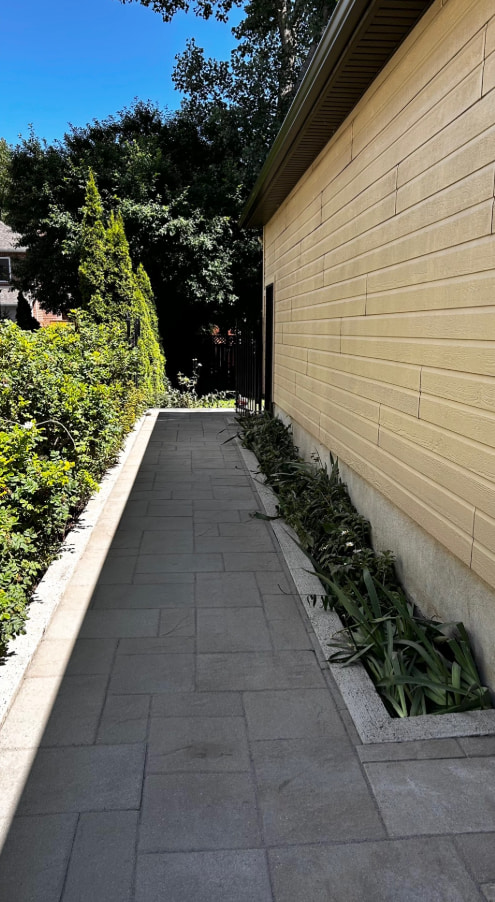
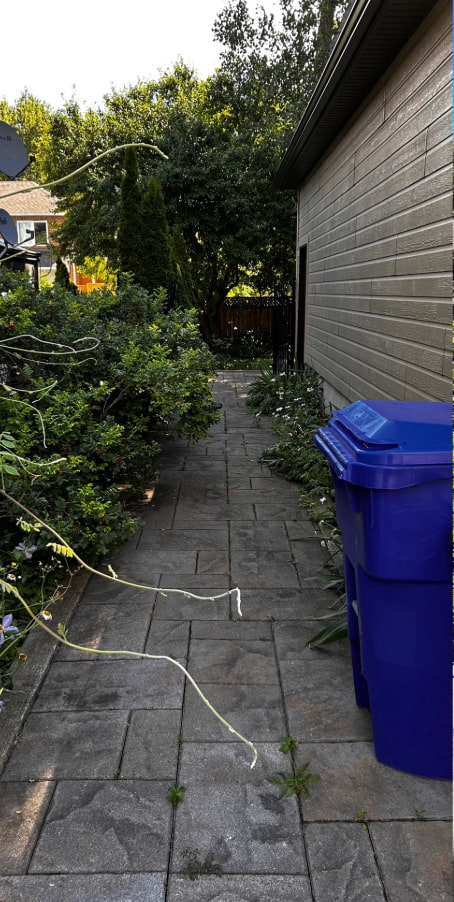
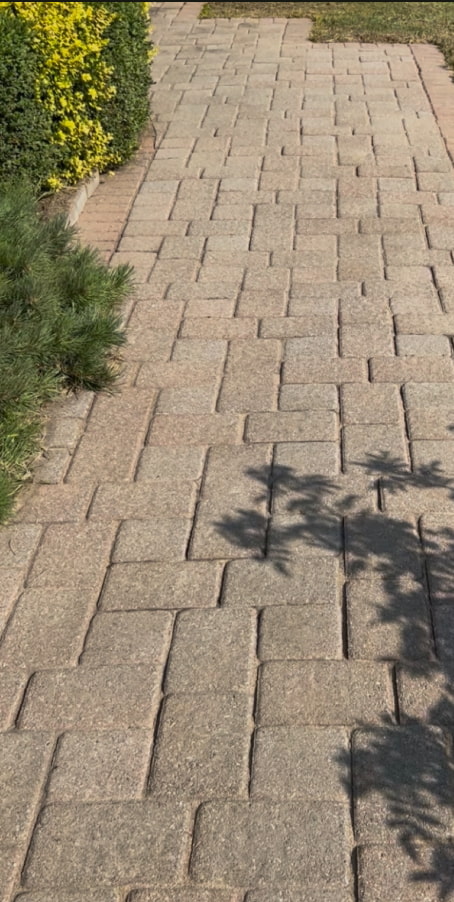
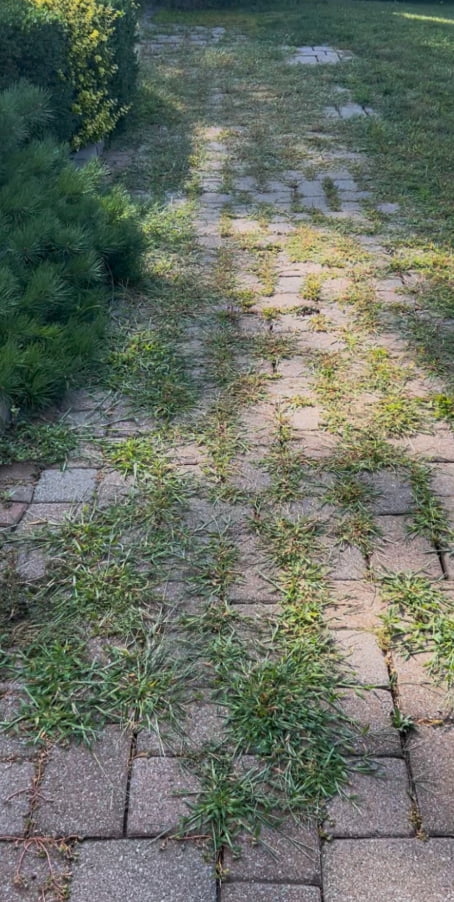
Before and after, on our jobs
Drag the bar to see the difference. See all our before and after photos.
Cleaning, joints or releveling?
Interlock that "needs repair" can mean three quite different things. Here is how to tell which one you have.
- Moss, black stains, weeds or dull pavers: that is an interlock cleaning. The pressure wash removes everything, including the old sand in the joints.
- Empty joints, sand washing away, ants or weeds in the joints: the joints need new sand, covered in our article on redoing joints. With us it is the same visit: after the wash, we put in fresh polymeric sand. The old sand has to come out first, at least 1.5 in (38 mm), or the new sand will not hold.
- A few low spots or pavers that move: these are small spots for releveling, done during a restoration once the cause is found. Why interlock pavers sink.
- The whole driveway is uneven, with highs and lows everywhere: that is no longer a cleaning or a releveling. When the base is uneven almost everywhere, the pavers have to be laid again, and that is not a job we take. Restore or replace.
- The pavers are clean and you want to protect them: that is sealing, applied about 30 days after the sand. Never over dirty pavers, because the sealer would lock the dirt in.
Not sure what your pavers need? A free visit is enough to find out, and we tell you straight.
What to look at before you call us
A few minutes outside tell you what you are dealing with, and your answers help us prepare the visit:
- The joints: is sand missing, or washing away in the rain? How to redo the joints.
- The water: where does rain and roof water go? A downspout that empties onto or beside the pavers can cause low spots.
- Low spots and bumps: in a few places, or everywhere? Why interlock pavers sink.
- The weeds: do they come back fast after each pulling?
- Photos: take a few, close and from a distance, before the visit.
Frequently asked questions about interlock repair
Another question? Call or text us at 819 328-2129, or read our answers about interlock repair.

Clean joints for years to come
We come see your pavers and give you a written price, free.
Get my free quoteFree visit, written price, 12-month warranty.